MSoftech · May 2024 – Dec 2024

AI AquaLab

A B2B water quality analysis platform that evaluates groundwater market value through 4 AI Agents and 56 inspection criteria — generating comprehensive reports with mineral profiling, safety scoring, and branding strategy recommendations for bottled water development.

4
AI Agents
7
Stage Grading
56
Inspection Criteria
aqualab.msoftech.com
AquaLab Data Center
AI Agent Ops 기반 수질 데이터 통합 관리 플랫폼
Platform ACTIVE
MOE DATA
수질기준 위반 내역
환경부 공시 연간 위반 데이터
MOE DATA
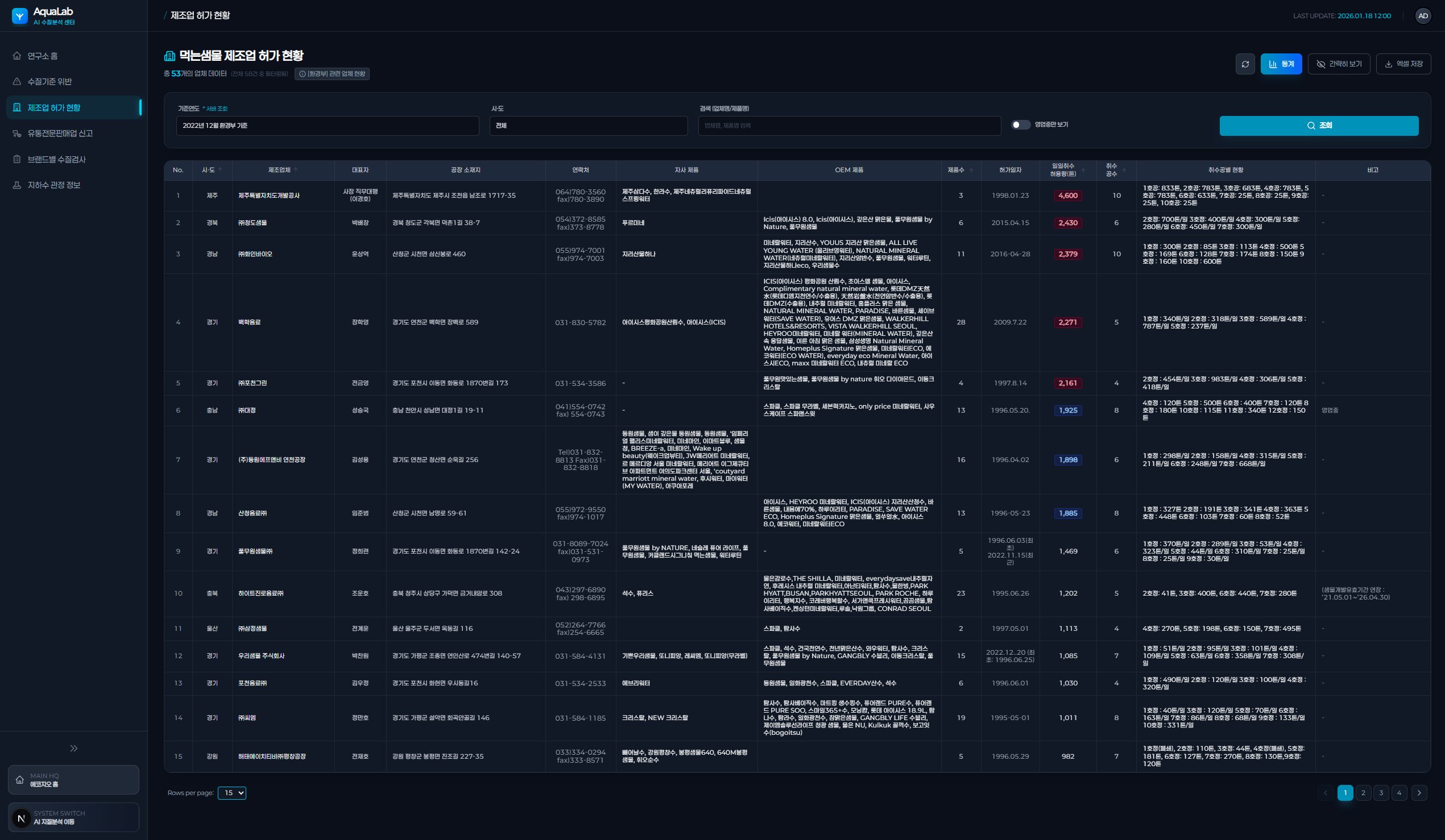
제조업체 허가 현황
전국 먹는샘물 제조 업체
MOE DATA
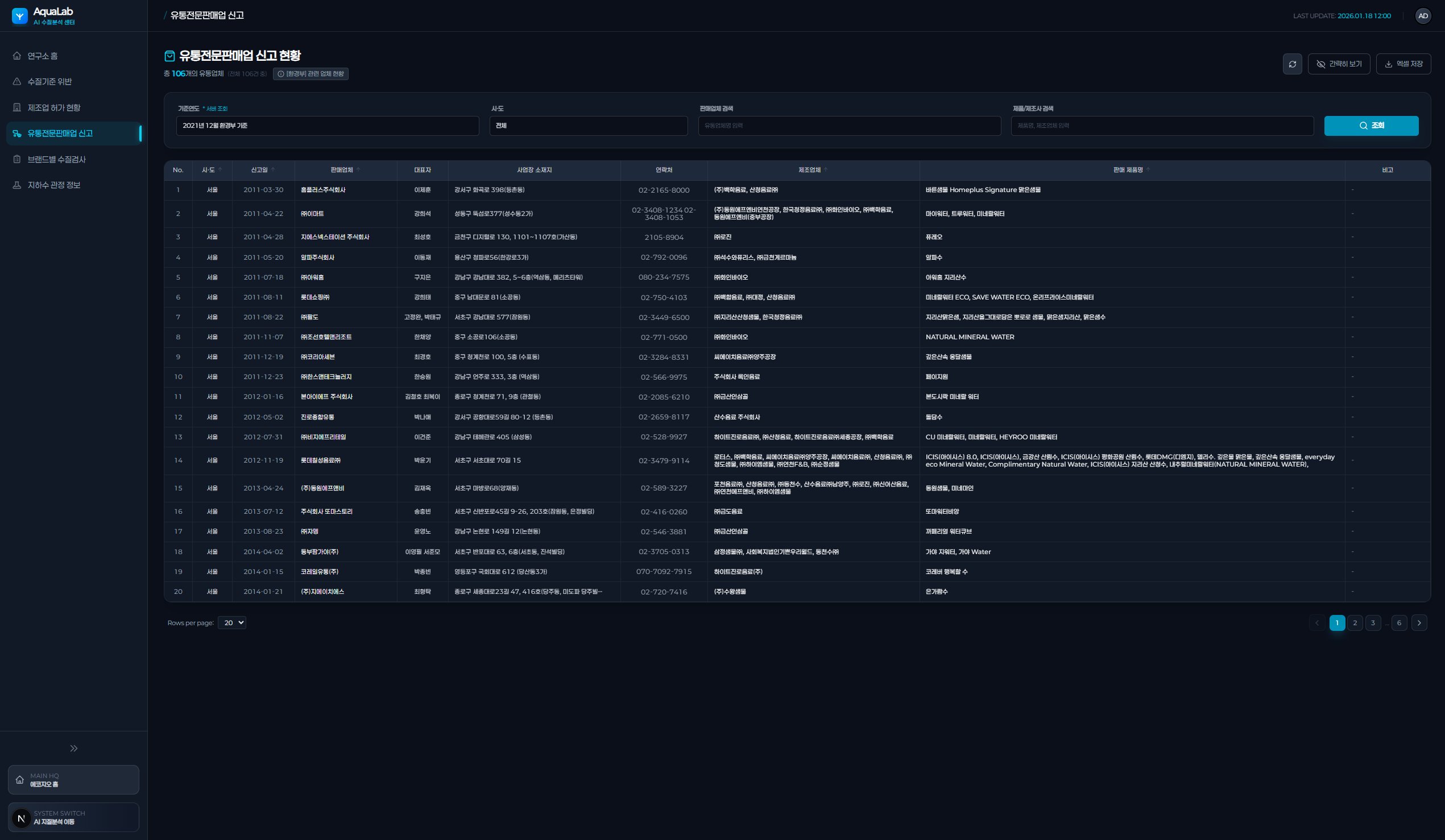
유통전문 판매업
OEM 및 자사 브랜드 유통
AI LAB
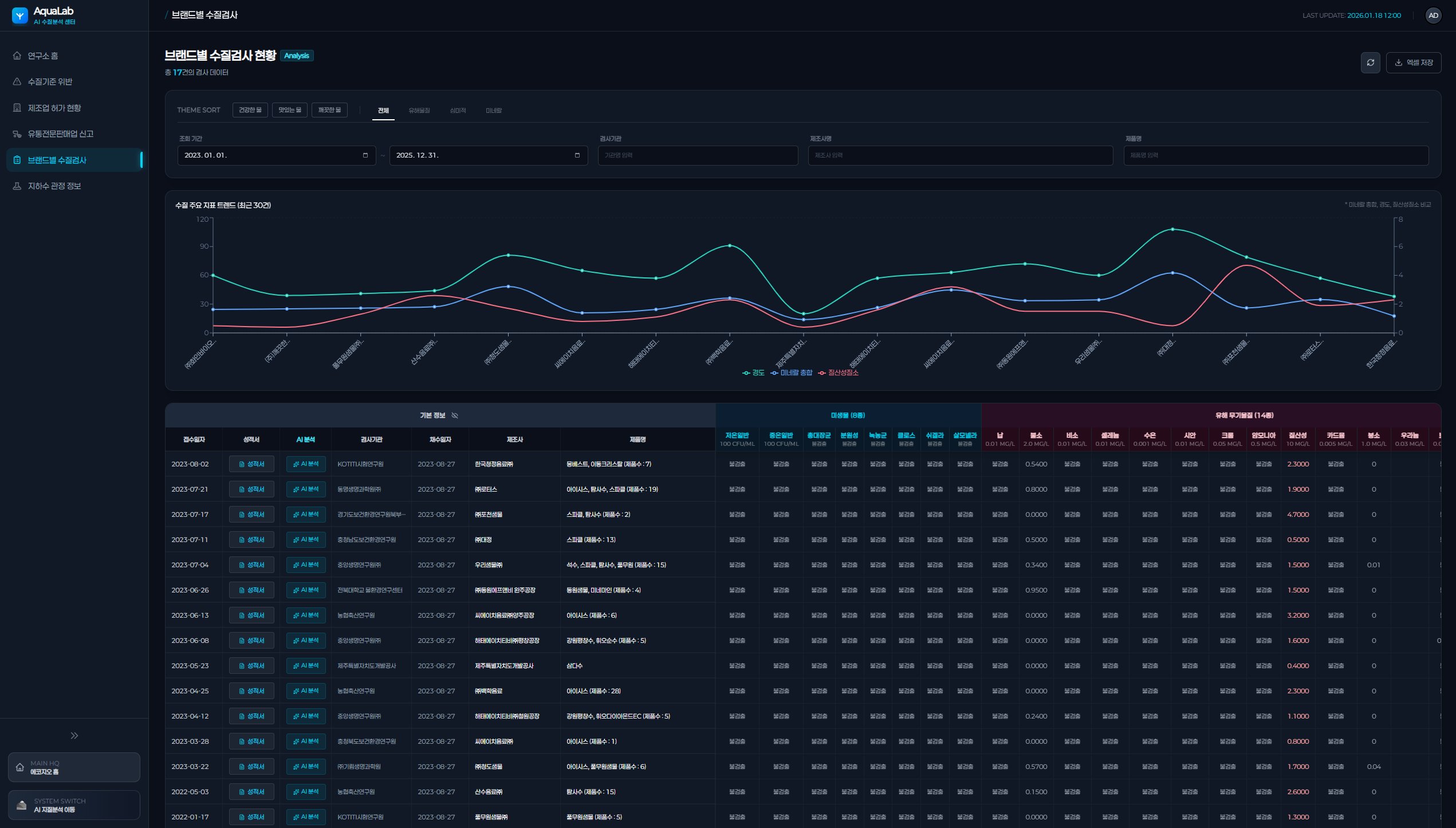
브랜드별 수질 검사분석
수질 성적서를 AI Agent가 분석
AI Agent Workflow
BATCH CYCLE COMPLETED
Data Loader
Raw Data Fetching
WAITING
Mineral Agent
Balance Analysis
WAITING
Hazard Agent
Toxicity Scanning
WAITING
Suitability Agent
Usage Verification
WAITING
Report Agent
Final Drafting
WAITING
Target ID
BATCH-2026-07-536
Neural Engine
Google Vertex AI
Current Process
System Standby...
REAL-TIME LOG STREAM
ONLINE
Overview

Project Overview

AI AquaLab is a data-driven platform built for groundwater developers entering the bottled water market. It integrates public data from Korea's Ministry of Environment (MOE) and KIGAM standards to provide a unified view of water quality violations, manufacturer permits, distribution registries, and brand-level quality inspections.

The core value lies in the AI Analysis Report — powered by 4 sequential Agents (Mineral, Hazard, Suitability, Report), the system evaluates raw water quality data across 56 criteria and generates a structured 7-section report covering mineral balance, safety composition, usage recommendations, and branding potential. This report serves as a ready-made sales tool for developers to demonstrate their water's competitive value to prospective manufacturers.

Period
May 2024 – Dec 2024
Type
MSoftech Product
Role
AI Solutions Architect · Full-Stack Engineer
Domain
Water Quality · Environmental Data · B2B Analytics
Domain Expertise

Independent Domain Research

Building AI AquaLab required far more than engineering. MSoftech independently conducted deep industry research — studying water quality regulations, manufacturing permit structures, distribution laws, and groundwater development practices — before designing a single screen. Every data model, every AI evaluation criterion, and every report section is grounded in real regulatory and market knowledge.

Water Quality Standards
56 inspection criteria based on KFDA/KIGAM standards, mineral classification methods, and safety threshold interpretation for drinking water assessment.
Manufacturing Regulations
Bottled water manufacturing permit requirements, OEM production structures, facility standards, and compliance frameworks under Korean food safety law.
Distribution & Sales Law
Registration requirements for bottled water distributors, brand portfolio management rules, and regional distribution compliance across 106+ registered entities.
Groundwater Development
Well permit processes, geological survey interpretation, groundwater usage classifications, and inspection compliance rates across active development sites.
Market & Competitive Analysis
Bottled water brand landscape, pricing structures, OEM market dynamics, and competitive positioning strategies for new market entrants.
From domain research and system planning to UI/UX design, AI architecture, and full-stack development — MSoftech delivered every phase independently as a single integrated team.
Core Feature

AI Analysis Report

The platform's core output — a structured 7-section AI report that transforms raw water quality data into actionable market intelligence. Each report evaluates mineral composition, safety metrics, target consumer segments, and branding potential, serving as a ready-made sales tool for groundwater developers.
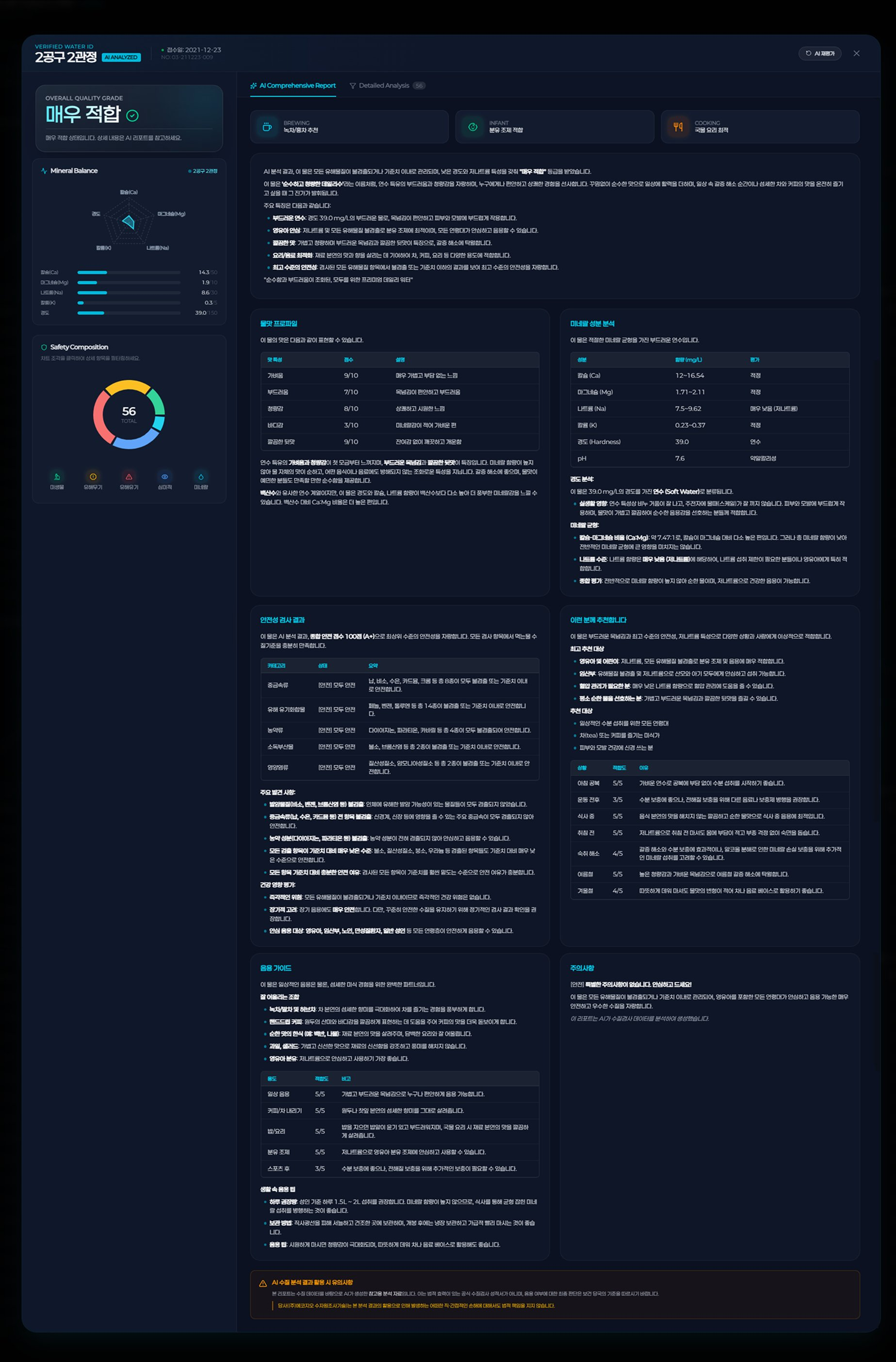
AI Comprehensive Report · Brand Water Analysis
AI Analysis Report
01
Water Profiling
Taste characteristics, brewing and cooking suitability, overall quality grade with confidence scoring
02
Mineral Balance Analysis
Ca/Mg/K ratio evaluation, hardness classification, mineral composition compared to industry benchmarks
03
Safety Composition
56-criteria safety scoring with pass/fail breakdown across hazardous substances, heavy metals, and microbiological indicators
04
Target Recommendations
AI-suggested consumer segments — infants, athletes, elderly — based on mineral profile and safety grade
05
Usage Guide
Optimal use cases for brewing, cooking, and direct consumption with temperature and pairing recommendations
06
Cautions & Notes
Storage conditions, shelf-life considerations, and regulatory compliance notes for commercial distribution
07
Comprehensive Verdict
Final quality grade (매우 적합 / 적합 / 부적합) with branding strategy recommendations and competitive positioning analysis
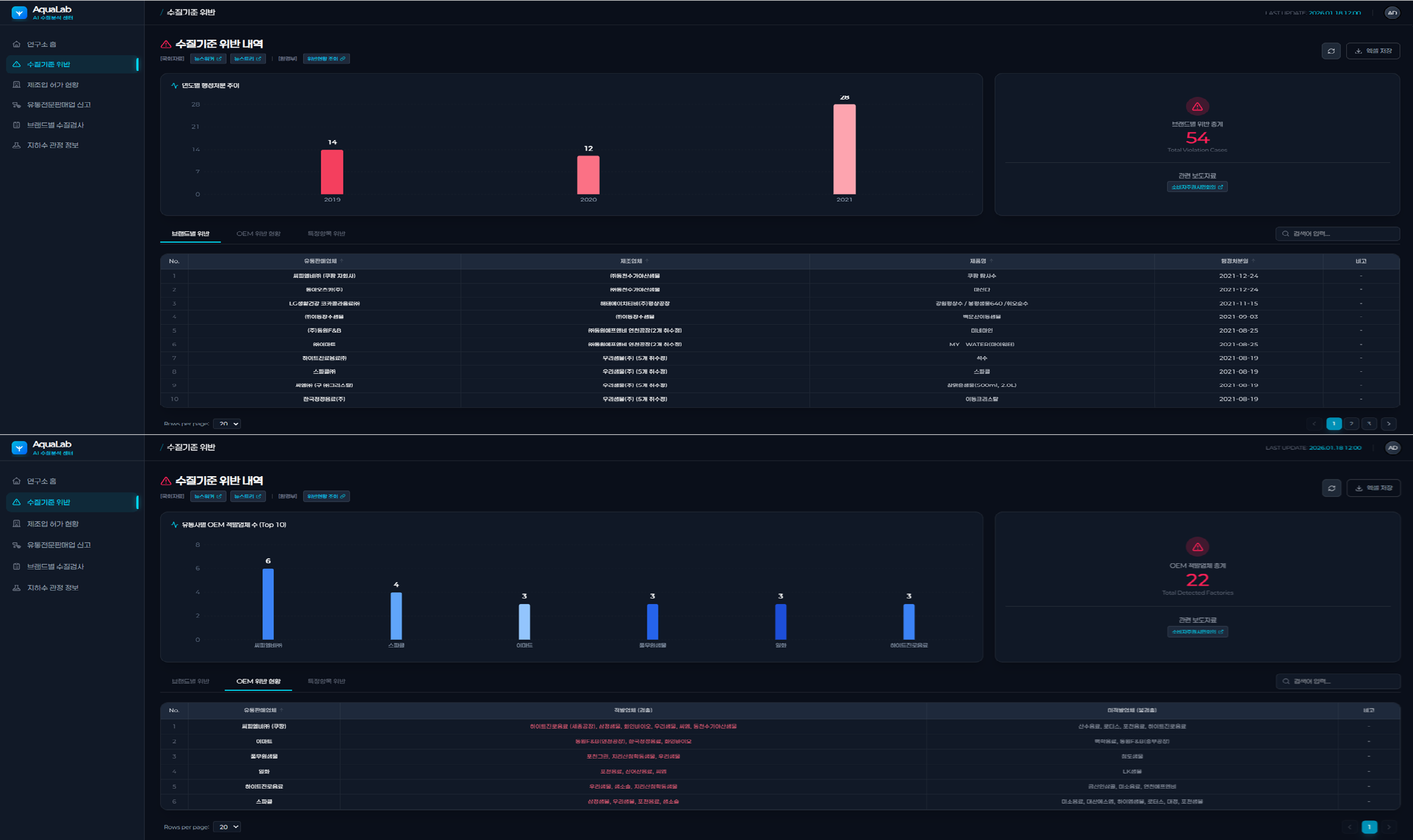
Key Screens

Data Modules

Violation Records
Water Quality Violation Records
Annual violation data from Korea's Ministry of Environment. Trend analysis by year, OEM brand breakdown, and specific violation category tracking across all licensed manufacturers.
Manufacturer Permits
Manufacturer Permit Registry
Complete database of 53 licensed bottled water manufacturers with permit details, OEM brand mapping, production capacity, and well location data.
Distribution Registry
Distribution Sales Registry
106 registered distributors with business type, brand portfolio, registration timeline, and regional coverage analysis.
Brand Water Quality Inspection
172 inspection records with mineral trend charts, brand comparison, and one-click AI analysis trigger for detailed report generation.
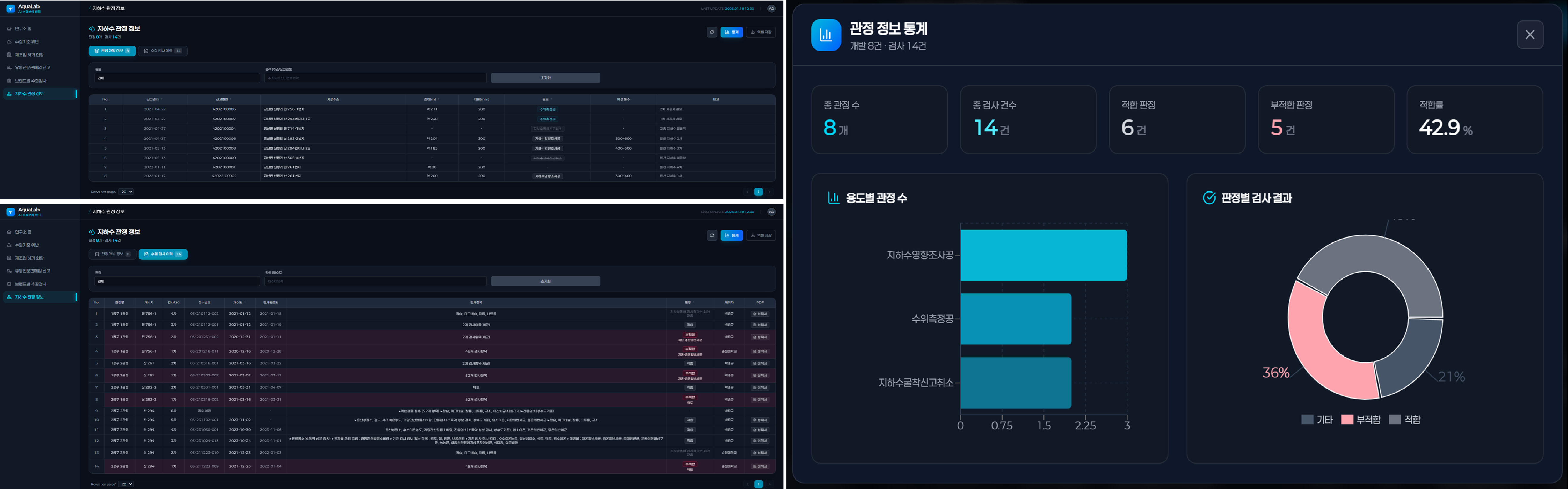
Groundwater Well Information
Well registry with usage type classification, inspection history, compliance rate statistics, and interactive charts for pass/fail distribution.
System Architecture

Service Flow

The system follows a linear data pipeline — ingesting public water quality data from MOE and KIGAM sources through the Spring Boot API layer, then routing it through a 4-Agent sequential AI pipeline (Mineral → Hazard → Suitability → Report) to generate a structured 7-section analysis report. All results are validated against KR standards before being persisted and visualized on the Data Center dashboard.

Service Flow

Water Quality Data Spring Boot API AI Agent Pipeline AI Report PDF KIGAM / MOE Standards Data Ingestion Layer Mineral → Hazard → Suitability → Report 7-Section PDF Output 환경부 수질 DB · 먹는샘물 정보 Java 17 · JPA · PostgreSQL Google Vertex AI · Gemini · Prompt Registry Schema Validation · DTO Mapping Dashboard · Data Center React 18 · TypeScript · Recharts
Results

Impact

53
Manufacturers Tracked
Licensed bottled water
manufacturers nationwide
172
Inspection Records
Brand-level water quality
test data integrated
106
Distributors Registered
OEM and brand distribution
network mapped
7
AI Report Sections
Structured analysis from
profiling to branding
Technology

Tech Stack

Frontend
React 18 TypeScript Recharts Material UI
Backend
Spring Boot Java 17 JPA RESTful API
AI Engine
Google Vertex AI Google Gemini Prompt Registry Schema Validation
Data
PostgreSQL MOE Water DB KIGAM Standards